What happens when the unusual becomes ordinary?
A new sound keeps us awake - until we stop noticing it. A person living with persistent pain learns which sensations are ordinary and which signal that something has changed. Someone entering prison must learn unfamiliar rules, relationships and threats. Someone leaving prison may discover that adaptations which helped inside are difficult to leave behind. A major improvement can produce the same underlying challenge. Greater safety, freedom, comfort or free time may also require the receiver to develop a new model of normal. Humans do not adapt only to hardship. We adapt whenever experienced reality repeatedly differs from what we have learned to expect. What repeatedly differs from normal may eventually help redefine normal.Adaptation changes the receiver
At first, a new environment may produce many differences. Ordinary tasks demand attention because the receiver does not yet know: • what matters; • what can safely pass; • what should attract attention; • what different signals mean; • which responses are available; or • which actions are likely to work. This uncertainty consumes time, attention and other resources. Through experience, the receiver begins to learn. Expectations change. Useful distinctions develop. Some responses become routine. Signals that once attracted attention become familiar, while other differences become easier to detect. The environment may not have become simpler. The receiver has changed.Constructing a new normal
Adaptation can be understood as a continuing cycle: 1. Departure Reality differs from the receiver’s existing model of normal. 2. Demand The differences attract attention and consume resources. 3. Experiment The receiver tries to understand the situation and tests possible responses. 4. Feedback Outcomes provide evidence about what works, what matters and what can be ignored. 5. Write-back Expectations, sensitivities, representations and thresholds change. 6. New normal Some previously unusual conditions become expected. 7. Recalibration When the environment changes again, the receiver may need to adapt again. This process need not be deliberate. A receiver may change without consciously deciding how to change — or even noticing that change has occurred.Habituation, sensitisation and discrimination
Repeated experience does not always affect the receiver in the same way. Habituation A repeated signal may attract less attention. The traffic outside, the hum of an air conditioner or the pressure of a watch against the skin may gradually move into the background. Sensitisation Repeated experience may instead make the receiver more sensitive. Smaller signs of conflict, danger or pain may begin to trigger attention more quickly. Discrimination The receiver may learn that differences which once appeared identical are not the same. An experienced mechanic distinguishes one engine sound from another. A person living with pain distinguishes their usual discomfort from the beginning of a flare-up. A newcomer learns which local rules are important and which apparent differences are harmless. Adaptation is therefore not simply noticing less. It can mean becoming less sensitive to some differences and more sensitive to others. The receiver develops a different allocation of attention.When difficult conditions become normal
People can adapt to extraordinary conditions: • persistent pain; • danger; • confinement; • poverty; • discrimination; • abusive relationships; • unsafe working practices; • constant noise; • institutional dysfunction; or • prolonged uncertainty. This capacity can help people continue functioning when they cannot immediately change their circumstances. But adaptation should not be confused with approval or improvement. What becomes normal does not necessarily become good. When a harmful condition becomes part of the receiver’s normal, it may produce less contrast and attract less attention. The person may no longer notice how unusual the condition would appear to another receiver — or how different their present life is from their earlier life. Adaptation can therefore protect the receiver while also making the condition harder to see.Living with pain
Persistent pain may initially dominate attention because it differs strongly from the receiver’s previous model of normal. Over time, the receiver may construct a different baseline: “This is how my body normally feels now.” The pain may remain, but its relationship with expectation, attention and action can change. Some sensations become familiar. The person may develop finer distinctions between ordinary pain, an approaching flare, an unfamiliar sensation and a sign that something has changed. This adaptation can release resources for other activities. It can also create risks. If pain becomes normal, meaningful deterioration may be slower to attract attention. Alternatively, repeated pain may increase sensitivity, so that smaller signals produce alarm. NL does not assume that people simply “get used to” pain. It asks how continuing experience may change what registers, what attracts attention and what the receiver learns to treat as normal.Adapting to confinement
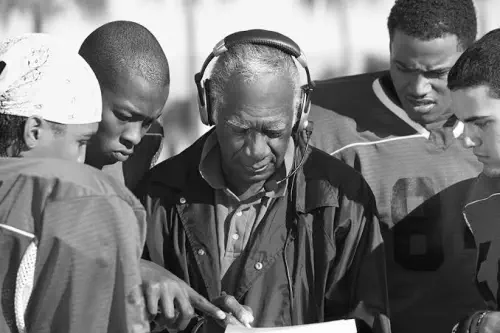
Entering prison requires extensive recalibration. The receiver may need to learn: • which signals indicate danger; • which rules are formal and which are informal; • whom to trust; • how openly to communicate; • which behaviour attracts attention; • which resources must be protected; and • which responses are defensible in that environment. Behaviours that previously seemed unusual may become necessary and expected. Vigilance, guarded communication or emotional restraint may be locally useful adaptations. But an adaptation that works in one environment may become costly in another. After release, expectations and responses constructed inside prison may not disappear at the gate. Ordinary uncertainty may still be represented as danger. Trust may require much more evidence. Behaviour that was protective inside may be misunderstood outside. The person leaving is not simply the person who entered, returned unchanged to an earlier environment. The receiver has been rewritten by experience.Adaptation to positive change
Humans also adapt to improvement: • greater safety; • better health; • increased wealth; • new freedoms; • improved technology; • greater comfort; • higher status; • more choice; • shorter working hours; and • longer lives. At first, an improvement may produce a strong difference. It attracts attention and may create relief, pleasure, excitement or gratitude. Over time, it can become expected. The improved condition becomes part of the new normal. It may attract less attention even though its benefits continue. We can continue benefiting from an improvement after we have stopped noticing that it is an improvement. Running water may produce little daily pleasure, but its loss attracts immediate attention. A safe environment may feel unremarkable until a threat appears. Additional free time may quickly become ordinary — and then feel insufficient. The reality has not necessarily deteriorated. The baseline has moved.When adaptation means stopping
We sometimes treat adaptation as learning to function within changed conditions. But adaptation may also involve recognising that a condition should no longer be accommodated. People can become accustomed to pain, excessive demands, failing projects and unsuitable ways of living. As these become normal, the differences that once attracted attention may gradually disappear into the background. Effective adaptation may therefore require more than adjusting to the present. It may require questioning the normal that has formed, withdrawing resources from an unsuccessful course and beginning to construct another.An age of abundance
Technology and artificial intelligence may eventually reduce the amount of human labour required. If that happens, one of the resources made more widely available could be time. But making time available does not determine what people will receive from it. A receiver shaped by work, scarcity and constant productivity may not automatically experience additional free time as freedom. It may initially be represented as: • unemployment; • loss of purpose; • reduced status; • lack of usefulness; • boredom; • guilt; • exclusion; or • uncertainty about how to live. The external change may create new possibilities while also producing a serious mismatch with existing models of identity, value and belonging. “If I am no longer needed to work, what am I needed for?” This need not be resistance to improvement. It may be the understandable response of a receiver whose model of normal was constructed in a different environment.Receiving abundance
More free time is still a finite resource. It must be allocated. More information still competes for attention. More choice still requires judgment. More convenience may release resources while weakening capacities that are no longer exercised. People may use greater freedom to create, learn, care, explore, build relationships or contribute to their communities. They may also recreate scarcity, pursue endless stimulation or allow other systems to capture the attention that technology has freed. Removing a constraint creates possibility. It does not decide what the receiver will do with it. Preparing for abundance may therefore require different forms of learning. We may need to become better able to: • notice what genuinely interests us; • distinguish satisfaction from stimulation; • allocate attention without external schedules; • construct purpose without paid employment; • tolerate periods in which nothing demands an immediate response; • learn without needing a qualification; • contribute without measuring every contribution financially; • preserve curiosity and agency; and • maintain relationships and social belonging. In an environment of scarcity, the central problem may be obtaining enough. In an environment of abundance, the problem may be deciding what deserves our limited attention.Adaptive lag
Reality can change faster than the receiver’s model of normal. A person may enter a safer environment while continuing to expect danger. Someone whose health improves may remain organised around the limitations of illness. A person with new freedom may continue waiting for permission to act. Institutions can also fall behind. Technology may reduce the need for work before society has revised: • how income is distributed; • how status is allocated; • how contribution is recognised; • how adults structure their time; • how communities are formed; or • how purpose is understood. The available world may have changed while people and institutions continue operating with models constructed under earlier conditions. This is adaptive lag: the delay between reality changing and the receiver detecting, representing and responding to that change.Adaptations do not travel equally well
An adaptation is not simply good or bad. Its value depends partly on the environment in which it is used. A response may be: • useful in one setting and harmful in another; • helpful in the short term and costly over time; • protective for one purpose while limiting another; • difficult to reverse after the original condition has disappeared; or • so familiar that the receiver no longer recognises it as an adaptation. This creates a continuing question: Is this response still fitted to the environment I am now in? Adaptation may require learning something new. Recalibration may also require allowing an earlier adaptation to weaken.Not noticing that we have adapted
The better we adapt to a condition, the harder it may become to notice how much we have adapted. Sometimes contrast makes the adaptation visible: “I didn’t realise how tense I was until I relaxed.” “I thought everyone lived like that.” “I had forgotten how difficult that used to be.” “I didn’t know how guarded I had become.” “I only noticed the noise when it stopped.” A change of environment, a period of relief, another person’s reaction or the return of an earlier condition may create enough difference for the receiver’s new normal to become visible. The receiver can then begin to examine not only the environment, but how the environment has changed the receiver.Can adaptation be guided?
We cannot prevent experience from changing us. But we may be able to make some of that change more visible and deliberate. Useful questions include: • What has become normal? • What no longer attracts my attention? • What am I now more sensitive to? • Which distinctions have I learned to make? • Which differences have become harder to see? • Which adaptations still serve me? • Which belong to an environment I have left? • What resources has adaptation released? • What capacities may have weakened? • Am I adapting to an improvement as well as to a loss? • What possibilities are available that my existing model does not yet represent? These questions do not assume that every adaptation should be reversed. They make the changing receiver available for examination.New normal does not mean final normal
A model of normal is not a permanent destination. The receiver changes. The environment changes. Purposes change. Resources change. A model that once worked may no longer be sufficient. Adaptation is therefore not a single movement from abnormal to normal. It is a continuing process of recalibration between a changing receiver and a changing world. A better environment does not automatically create a better experience. The receiver must also learn how to receive it. And an age of abundance will still require us to decide what better means.
Adaptation & New
Normals
USE IT. ADAPT IT. TEST IT.

“ What feels strange today
may feel completely normal tomorrow.”

“ The world may have changed.
We may still be living by the rules we learned before.”


© The Noticing Loop - 2026





Adaptation & New Normals
What happens when the unusual
becomes ordinary?
A new sound keeps us awake - until we stop noticing it. A person living with persistent pain learns which sensations are ordinary and which signal that something has changed. Someone entering prison must learn unfamiliar rules, relationships and threats. Someone leaving prison may discover that adaptations which helped inside are difficult to leave behind. A major improvement can produce the same underlying challenge. Greater safety, freedom, comfort or free time may also require the receiver to develop a new model of normal. Humans do not adapt only to hardship. We adapt whenever experienced reality repeatedly differs from what we have learned to expect. What repeatedly differs from normal may eventually help redefine normal.Adaptation changes the receiver
At first, a new environment may produce many differences. Ordinary tasks demand attention because the receiver does not yet know: • what matters; • what can safely pass; • what should attract attention; • what different signals mean; • which responses are available; or • which actions are likely to work. This uncertainty consumes time, attention and other resources. Through experience, the receiver begins to learn. Expectations change. Useful distinctions develop. Some responses become routine. Signals that once attracted attention become familiar, while other differences become easier to detect. The environment may not have become simpler. The receiver has changed.Constructing a new normal
Adaptation can be understood as a continuing cycle: 1. Departure Reality differs from the receiver’s existing model of normal. 2. Demand The differences attract attention and consume resources. 3. Experiment The receiver tries to understand the situation and tests possible responses. 4. Feedback Outcomes provide evidence about what works, what matters and what can be ignored. 5. Write-back Expectations, sensitivities, representations and thresholds change. 6. New normal Some previously unusual conditions become expected. 7. Recalibration When the environment changes again, the receiver may need to adapt again. This process need not be deliberate. A receiver may change without consciously deciding how to change — or even noticing that change has occurred.Habituation, sensitisation and
discrimination
Repeated experience does not always affect the receiver in the same way. Habituation A repeated signal may attract less attention. The traffic outside, the hum of an air conditioner or the pressure of a watch against the skin may gradually move into the background. Sensitisation Repeated experience may instead make the receiver more sensitive. Smaller signs of conflict, danger or pain may begin to trigger attention more quickly. Discrimination The receiver may learn that differences which once appeared identical are not the same. An experienced mechanic distinguishes one engine sound from another. A person living with pain distinguishes their usual discomfort from the beginning of a flare-up. A newcomer learns which local rules are important and which apparent differences are harmless. Adaptation is therefore not simply noticing less. It can mean becoming less sensitive to some differences and more sensitive to others. The receiver develops a different allocation of attention.When difficult conditions become
normal
People can adapt to extraordinary conditions: • persistent pain; • danger; • confinement; • poverty; • discrimination; • abusive relationships; • unsafe working practices; • constant noise; • institutional dysfunction; or • prolonged uncertainty. This capacity can help people continue functioning when they cannot immediately change their circumstances. But adaptation should not be confused with approval or improvement. What becomes normal does not necessarily become good. When a harmful condition becomes part of the receiver’s normal, it may produce less contrast and attract less attention. The person may no longer notice how unusual the condition would appear to another receiver — or how different their present life is from their earlier life. Adaptation can therefore protect the receiver while also making the condition harder to see.Living with pain
Persistent pain may initially dominate attention because it differs strongly from the receiver’s previous model of normal. Over time, the receiver may construct a different baseline: “This is how my body normally feels now.” The pain may remain, but its relationship with expectation, attention and action can change. Some sensations become familiar. The person may develop finer distinctions between ordinary pain, an approaching flare, an unfamiliar sensation and a sign that something has changed. This adaptation can release resources for other activities. It can also create risks. If pain becomes normal, meaningful deterioration may be slower to attract attention. Alternatively, repeated pain may increase sensitivity, so that smaller signals produce alarm. NL does not assume that people simply “get used to” pain. It asks how continuing experience may change what registers, what attracts attention and what the receiver learns to treat as normal.Adapting to confinement
Entering prison requires extensive recalibration. The receiver may need to learn: • which signals indicate danger; • which rules are formal and which are informal; • whom to trust; • how openly to communicate; • which behaviour attracts attention; • which resources must be protected; and • which responses are defensible in that environment. Behaviours that previously seemed unusual may become necessary and expected. Vigilance, guarded communication or emotional restraint may be locally useful adaptations. But an adaptation that works in one environment may become costly in another. After release, expectations and responses constructed inside prison may not disappear at the gate. Ordinary uncertainty may still be represented as danger. Trust may require much more evidence. Behaviour that was protective inside may be misunderstood outside. The person leaving is not simply the person who entered, returned unchanged to an earlier environment. The receiver has been rewritten by experience.Adaptation to positive change
Humans also adapt to improvement: • greater safety; • better health; • increased wealth; • new freedoms; • improved technology; • greater comfort; • higher status; • more choice; • shorter working hours; and • longer lives. At first, an improvement may produce a strong difference. It attracts attention and may create relief, pleasure, excitement or gratitude. Over time, it can become expected. The improved condition becomes part of the new normal. It may attract less attention even though its benefits continue. We can continue benefiting from an improvement after we have stopped noticing that it is an improvement. Running water may produce little daily pleasure, but its loss attracts immediate attention. A safe environment may feel unremarkable until a threat appears. Additional free time may quickly become ordinary — and then feel insufficient. The reality has not necessarily deteriorated. The baseline has moved.When adaptation means stopping
We sometimes treat adaptation as learning to function within changed conditions. But adaptation may also involve recognising that a condition should no longer be accommodated. People can become accustomed to pain, excessive demands, failing projects and unsuitable ways of living. As these become normal, the differences that once attracted attention may gradually disappear into the background. Effective adaptation may therefore require more than adjusting to the present. It may require questioning the normal that has formed, withdrawing resources from an unsuccessful course and beginning to construct another.An age of abundance
Technology and artificial intelligence may eventually reduce the amount of human labour required. If that happens, one of the resources made more widely available could be time. But making time available does not determine what people will receive from it. A receiver shaped by work, scarcity and constant productivity may not automatically experience additional free time as freedom. It may initially be represented as: • unemployment; • loss of purpose; • reduced status; • lack of usefulness; • boredom; • guilt; • exclusion; or • uncertainty about how to live. The external change may create new possibilities while also producing a serious mismatch with existing models of identity, value and belonging. “If I am no longer needed to work, what am I needed for?” This need not be resistance to improvement. It may be the understandable response of a receiver whose model of normal was constructed in a different environment.Receiving abundance
More free time is still a finite resource. It must be allocated. More information still competes for attention. More choice still requires judgment. More convenience may release resources while weakening capacities that are no longer exercised. People may use greater freedom to create, learn, care, explore, build relationships or contribute to their communities. They may also recreate scarcity, pursue endless stimulation or allow other systems to capture the attention that technology has freed. Removing a constraint creates possibility. It does not decide what the receiver will do with it. Preparing for abundance may therefore require different forms of learning. We may need to become better able to: • notice what genuinely interests us; • distinguish satisfaction from stimulation; • allocate attention without external schedules; • construct purpose without paid employment; • tolerate periods in which nothing demands an immediate response; • learn without needing a qualification; • contribute without measuring every contribution financially; • preserve curiosity and agency; and • maintain relationships and social belonging. In an environment of scarcity, the central problem may be obtaining enough. In an environment of abundance, the problem may be deciding what deserves our limited attention.Adaptive lag
Reality can change faster than the receiver’s model of normal. A person may enter a safer environment while continuing to expect danger. Someone whose health improves may remain organised around the limitations of illness. A person with new freedom may continue waiting for permission to act. Institutions can also fall behind. Technology may reduce the need for work before society has revised: • how income is distributed; • how status is allocated; • how contribution is recognised; • how adults structure their time; • how communities are formed; or • how purpose is understood. The available world may have changed while people and institutions continue operating with models constructed under earlier conditions. This is adaptive lag: the delay between reality changing and the receiver detecting, representing and responding to that change.Adaptations do not travel equally well
An adaptation is not simply good or bad. Its value depends partly on the environment in which it is used. A response may be: • useful in one setting and harmful in another; • helpful in the short term and costly over time; • protective for one purpose while limiting another; • difficult to reverse after the original condition has disappeared; or • so familiar that the receiver no longer recognises it as an adaptation. This creates a continuing question: Is this response still fitted to the environment I am now in? Adaptation may require learning something new. Recalibration may also require allowing an earlier adaptation to weaken.Not noticing that we have adapted
The better we adapt to a condition, the harder it may become to notice how much we have adapted. Sometimes contrast makes the adaptation visible: “I didn’t realise how tense I was until I relaxed.” “I thought everyone lived like that.” “I had forgotten how difficult that used to be.” “I didn’t know how guarded I had become.” “I only noticed the noise when it stopped.” A change of environment, a period of relief, another person’s reaction or the return of an earlier condition may create enough difference for the receiver’s new normal to become visible. The receiver can then begin to examine not only the environment, but how the environment has changed the receiver.Can adaptation be guided?
We cannot prevent experience from changing us. But we may be able to make some of that change more visible and deliberate. Useful questions include: • What has become normal? • What no longer attracts my attention? • What am I now more sensitive to? • Which distinctions have I learned to make? • Which differences have become harder to see? • Which adaptations still serve me? • Which belong to an environment I have left? • What resources has adaptation released? • What capacities may have weakened? • Am I adapting to an improvement as well as to a loss? • What possibilities are available that my existing model does not yet represent? These questions do not assume that every adaptation should be reversed. They make the changing receiver available for examination.New normal does not mean final
normal
A model of normal is not a permanent destination. The receiver changes. The environment changes. Purposes change. Resources change. A model that once worked may no longer be sufficient. Adaptation is therefore not a single movement from abnormal to normal. It is a continuing process of recalibration between a changing receiver and a changing world. A better environment does not automatically create a better experience. The receiver must also learn how to receive it. And an age of abundance will still require us to decide what better means.
“ What feels strange today
may feel completely normal tomorrow.”

“ The world may have changed.
We may still be living by the rules we learned before.”