Why does one person see noise while another sees an idea?
A strange result, an accidental pattern, an unexpected sound or an unlikely combination may pass unnoticed by one person and attract the attention of another. The difference is not necessarily contained in the signal alone. It also lies in the receiver: what they already know, what they expected, what they can distinguish and what possibilities they are able to represent. The Noticing Loop may help examine how an unexpected difference becomes a question, how a question becomes a possibility and how a possibility earns continued attention.Novelty is relative
Something appears new relative to a model of what is already normal, familiar or expected. The same idea may be: • obvious to an expert; • surprising to a novice; • conventional in one culture; • radical in another; • new to the creator but already familiar elsewhere. Novelty is therefore not simply a property contained within an object or idea. It is also a relationship between that object and a receiver’s existing representation. To understand the judgment “This is new,” we may need to ask: New to whom? New relative to what? And at what level of resolution?Creativity and discovery
Creativity and discovery are not identical. Creativity often involves constructing a new combination, representation, method or signal. Discovery involves noticing or representing something that was already present but had not previously become visible in that way. In practice, the two may overlap. A discovery requires a representation through which the previously unnoticed can be understood. A creative construction may reveal possibilities or relationships that were always available but had never been brought together. Both can begin when the existing model of normal no longer fully contains what has been encountered.The creative snag
Creative work may begin with a snag: Wait a second … what’s this? Something does not fit: • an observation contradicts an expectation; • a familiar object looks different from another perspective; • two unrelated ideas appear to share a structure; • an error produces an interesting result; • an established explanation leaves something unresolved; • a constraint makes the usual solution impossible. The difference has not yet become an idea. It has merely earned another allocation of attention. Many such differences will lead nowhere. Creativity requires a willingness to investigate without knowing in advance whether the investment will be worthwhile.Noise, error or possibility?
A departure from normal can be interpreted in several ways. It may be: • meaningless variation; • an error; • a coincidence; • a failure of measurement; • a misunderstood pattern; • evidence against the existing model; or • the beginning of a new possibility. The signal does not arrive carrying the correct label. The receiver must decide whether to ignore it, correct it, explain it away or continue exploring it. A strong model of normal makes recognition possible—but it can also make departures easier to dismiss. The more successful an existing explanation has been, the less reason there may appear to be to question it. Creative discovery may therefore require both expertise and a temporary willingness to loosen the authority of the current model.The prepared receiver
Discoveries are often described as accidents. But an accident becomes a discovery only when somebody recognises that it may matter. Many people may encounter the same difference without possessing the model, resolution or question needed to see its potential. Expertise can make subtle differences visible. It provides patterns against which the unexpected can stand out. Yet expertise may also create blind spots. An expert can become highly skilled at classifying familiar possibilities while overlooking something that falls outside the established categories. This creates a productive tension: A developed model helps us recognise what is different. An overly rigid model may prevent us from imagining what else the difference could mean. Chance may provide the difference. A prepared receiver recognises its potential.Generating and selecting
Creativity is not only the production of possibilities. Ideas must also be selected. A person may generate many variations, combinations and interpretations, but finite resources prevent all of them from being developed. The creator must decide: • Is this genuinely different? • Is the difference meaningful? • Does it solve anything? • Is it interesting, useful, beautiful or revealing? • Is it worth another hour, week or year? • What might be sacrificed by continuing? Generating possibilities and judging possibilities require different movements. Generation may benefit from temporarily lowering thresholds, suspending criticism and allowing unusual combinations to remain active. Selection requires thresholds to return. Resources must eventually be committed to some possibilities and withdrawn from others. Too much selection too early may eliminate fragile ideas before they can develop. Too little selection may produce endless novelty without completed work.Better relative to what?
Creative work is often described as producing something new and valuable. But value requires a unit of judgment. A new design may be judged by efficiency, elegance, accessibility, profit, originality or environmental cost. A scientific explanation may be judged by accuracy, simplicity, scope or predictive power. A piece of music may be judged by technical construction, emotional effect or cultural significance. These units can conflict. A creative idea is not simply “better.” It is better for some purpose, from some perspective, according to some unit and threshold. Making those units visible helps explain why receivers can reasonably disagree about the same work.Creativity through the NL
Detection What difference, connection or unresolved problem entered attention? Why did it snag this receiver when others allowed it to pass? Evaluation What might the difference become? Was it represented as noise, error, anomaly, question, opportunity or possibility? Commitment Was the possibility interesting or promising enough to receive further resources? What threshold had to be crossed before exploration became a project? Action What was made, tested, combined, changed or communicated? Was the creator exploring, refining, discarding or presenting the idea to another receiver? Learning What did the result change? Did the outcome strengthen the original idea, expose a limitation, produce another snag or reorganise the creator’s model of normal?Creativity as communication
A creative work becomes a signal for another receiver. The creator must construct something capable of snagging attention and sustaining enough engagement for the receiver to build a representation from it. This creates another tension. If the work is too familiar, it may pass without notice. If it is too unfamiliar, the receiver may be unable to interpret it and dismiss it as noise. Skilled creators can build layered signals. A work may be immediately accessible while containing subtler differences that become available to receivers with greater experience or resolution. Those differences may influence the receiver before they can be separately identified. We may know that a piece of music, image or idea affects us without being able to explain why. Further experience (or another receiver supplying the right distinction) may bring the partially resolved feature into clearer view. Different people may therefore engage successfully with the same work at different depths. The creator cannot directly place the intended representation into another person’s mind. They can only construct signals from which a receiver may build one.Constraints can create possibilities
Constraints are often treated as obstacles to creativity. But a constraint can disrupt the usual solution and force another representation to be constructed. Limited materials, time, space, vocabulary or technology may make familiar actions unavailable. The resulting difference can create the snag from which a new possibility develops. Maximum freedom does not necessarily produce optimum creativity. A useful constraint narrows some possibilities while making others easier to see.Failure and creative learning
Creative work produces uncertain outcomes. An unsuccessful experiment may still reveal a useful distinction. An abandoned idea may become part of a later solution. A work rejected by one audience may succeed with another. But failure does not automatically produce learning. The creator must decide what the outcome means: • Was the underlying idea weak? • Was the execution inadequate? • Was the wrong audience selected? • Was the signal poorly constructed? • Was the receiver unprepared? • Was the timing wrong? • Or was the result simply uncertain? Likewise, success may reinforce the wrong lesson. A work can succeed for reasons the creator did not understand, and copying its visible features may not reproduce the outcome. Every creative decision is an experiment, but experiments teach only when their outcomes are interpreted carefully.Questions NL can bring to creativity and discovery
• What was expected to be normal? • What differed? • Why did the difference snag this receiver? • What did others allow to pass as noise? • What prior knowledge made the possibility visible? • Did expertise support recognition or constrain it? • What alternative representations were constructed? • Were ideas being generated or selected? • Was judgment applied too early—or too late? • What resources were committed to continued exploration? • What did “better” mean in this context? • Which unit was used to judge the work? • For which receiver was the signal designed? • Was the work different enough to be noticed? • Was it familiar enough to be interpreted? • What did the outcome genuinely justify learning?A potential use - not a formula for creativity
The Noticing Loop does not explain where every idea comes from or provide a method guaranteed to produce creative work. It does not determine whether something is original, valuable, beautiful or true. It offers a way to examine how departures from normal enter attention, how possibilities are constructed and selected, how creative signals are designed for receivers and how outcomes reshape future judgment. Its potential contribution lies in making the transition more visible: What was first dismissed as noise? What made somebody look again? How did a difference become a possibility? And why was that possibility worth pursuing?
Creativity & Discovery

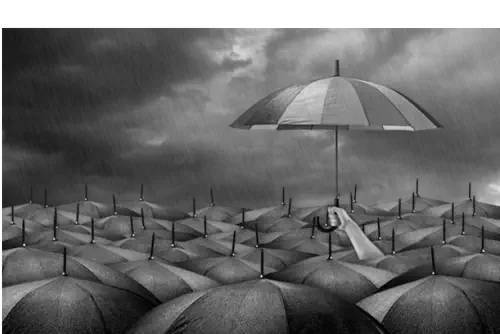
“Chance may provide the opportunity.
Someone still has to notice it.”
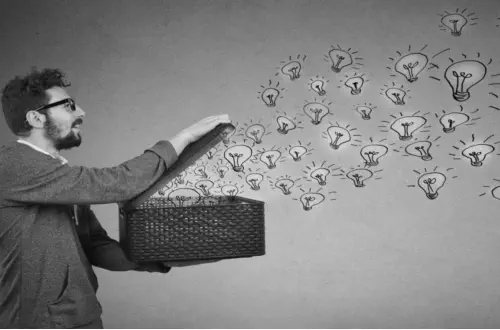
“One person sees a mistake.
Another sees the beginning of an idea.”


© The Noticing Loop - 2026






Why does one person see noise
while another sees an idea?
A strange result, an accidental pattern, an unexpected sound or an unlikely combination may pass unnoticed by one person and attract the attention of another. The difference is not necessarily contained in the signal alone. It also lies in the receiver: what they already know, what they expected, what they can distinguish and what possibilities they are able to represent. The Noticing Loop may help examine how an unexpected difference becomes a question, how a question becomes a possibility and how a possibility earns continued attention.Novelty is relative
Something appears new relative to a model of what is already normal, familiar or expected. The same idea may be: • obvious to an expert; • surprising to a novice; • conventional in one culture; • radical in another; • new to the creator but already familiar elsewhere. Novelty is therefore not simply a property contained within an object or idea. It is also a relationship between that object and a receiver’s existing representation. To understand the judgment “This is new,” we may need to ask: New to whom? New relative to what? And at what level of resolution?Creativity and discovery
Creativity and discovery are not identical. Creativity often involves constructing a new combination, representation, method or signal. Discovery involves noticing or representing something that was already present but had not previously become visible in that way. In practice, the two may overlap. A discovery requires a representation through which the previously unnoticed can be understood. A creative construction may reveal possibilities or relationships that were always available but had never been brought together. Both can begin when the existing model of normal no longer fully contains what has been encountered.The creative snag
Creative work may begin with a snag: Wait a second … what’s this? Something does not fit: • an observation contradicts an expectation; • a familiar object looks different from another perspective; • two unrelated ideas appear to share a structure; • an error produces an interesting result; • an established explanation leaves something unresolved; • a constraint makes the usual solution impossible. The difference has not yet become an idea. It has merely earned another allocation of attention. Many such differences will lead nowhere. Creativity requires a willingness to investigate without knowing in advance whether the investment will be worthwhile.Noise, error or possibility?
A departure from normal can be interpreted in several ways. It may be: • meaningless variation; • an error; • a coincidence; • a failure of measurement; • a misunderstood pattern; • evidence against the existing model; or • the beginning of a new possibility. The signal does not arrive carrying the correct label. The receiver must decide whether to ignore it, correct it, explain it away or continue exploring it. A strong model of normal makes recognition possible—but it can also make departures easier to dismiss. The more successful an existing explanation has been, the less reason there may appear to be to question it. Creative discovery may therefore require both expertise and a temporary willingness to loosen the authority of the current model.The prepared receiver
Discoveries are often described as accidents. But an accident becomes a discovery only when somebody recognises that it may matter. Many people may encounter the same difference without possessing the model, resolution or question needed to see its potential. Expertise can make subtle differences visible. It provides patterns against which the unexpected can stand out. Yet expertise may also create blind spots. An expert can become highly skilled at classifying familiar possibilities while overlooking something that falls outside the established categories. This creates a productive tension: A developed model helps us recognise what is different. An overly rigid model may prevent us from imagining what else the difference could mean. Chance may provide the difference. A prepared receiver recognises its potential.Generating and selecting
Creativity is not only the production of possibilities. Ideas must also be selected. A person may generate many variations, combinations and interpretations, but finite resources prevent all of them from being developed. The creator must decide: • Is this genuinely different? • Is the difference meaningful? • Does it solve anything? • Is it interesting, useful, beautiful or revealing? • Is it worth another hour, week or year? • What might be sacrificed by continuing? Generating possibilities and judging possibilities require different movements. Generation may benefit from temporarily lowering thresholds, suspending criticism and allowing unusual combinations to remain active. Selection requires thresholds to return. Resources must eventually be committed to some possibilities and withdrawn from others. Too much selection too early may eliminate fragile ideas before they can develop. Too little selection may produce endless novelty without completed work.Better relative to what?
Creative work is often described as producing something new and valuable. But value requires a unit of judgment. A new design may be judged by efficiency, elegance, accessibility, profit, originality or environmental cost. A scientific explanation may be judged by accuracy, simplicity, scope or predictive power. A piece of music may be judged by technical construction, emotional effect or cultural significance. These units can conflict. A creative idea is not simply “better.” It is better for some purpose, from some perspective, according to some unit and threshold. Making those units visible helps explain why receivers can reasonably disagree about the same work.Creativity through the NL
Detection What difference, connection or unresolved problem entered attention? Why did it snag this receiver when others allowed it to pass? Evaluation What might the difference become? Was it represented as noise, error, anomaly, question, opportunity or possibility? Commitment Was the possibility interesting or promising enough to receive further resources? What threshold had to be crossed before exploration became a project? Action What was made, tested, combined, changed or communicated? Was the creator exploring, refining, discarding or presenting the idea to another receiver? Learning What did the result change? Did the outcome strengthen the original idea, expose a limitation, produce another snag or reorganise the creator’s model of normal?Creativity as communication
A creative work becomes a signal for another receiver. The creator must construct something capable of snagging attention and sustaining enough engagement for the receiver to build a representation from it. This creates another tension. If the work is too familiar, it may pass without notice. If it is too unfamiliar, the receiver may be unable to interpret it and dismiss it as noise. Skilled creators can build layered signals. A work may be immediately accessible while containing subtler differences that become available to receivers with greater experience or resolution. Those differences may influence the receiver before they can be separately identified. We may know that a piece of music, image or idea affects us without being able to explain why. Further experience (or another receiver supplying the right distinction) may bring the partially resolved feature into clearer view. Different people may therefore engage successfully with the same work at different depths. The creator cannot directly place the intended representation into another person’s mind. They can only construct signals from which a receiver may build one.Constraints can create possibilities
Constraints are often treated as obstacles to creativity. But a constraint can disrupt the usual solution and force another representation to be constructed. Limited materials, time, space, vocabulary or technology may make familiar actions unavailable. The resulting difference can create the snag from which a new possibility develops. Maximum freedom does not necessarily produce optimum creativity. A useful constraint narrows some possibilities while making others easier to see.Failure and creative learning
Creative work produces uncertain outcomes. An unsuccessful experiment may still reveal a useful distinction. An abandoned idea may become part of a later solution. A work rejected by one audience may succeed with another. But failure does not automatically produce learning. The creator must decide what the outcome means: • Was the underlying idea weak? • Was the execution inadequate? • Was the wrong audience selected? • Was the signal poorly constructed? • Was the receiver unprepared? • Was the timing wrong? • Or was the result simply uncertain? Likewise, success may reinforce the wrong lesson. A work can succeed for reasons the creator did not understand, and copying its visible features may not reproduce the outcome. Every creative decision is an experiment, but experiments teach only when their outcomes are interpreted carefully.Questions NL can bring to
creativity and discovery
• What was expected to be normal? • What differed? • Why did the difference snag this receiver? • What did others allow to pass as noise? • What prior knowledge made the possibility visible? • Did expertise support recognition or constrain it? • What alternative representations were constructed? • Were ideas being generated or selected? • Was judgment applied too early—or too late? • What resources were committed to continued exploration? • What did “better” mean in this context? • Which unit was used to judge the work? • For which receiver was the signal designed? • Was the work different enough to be noticed? • Was it familiar enough to be interpreted? • What did the outcome genuinely justify learning?A potential use - not a formula for
creativity
The Noticing Loop does not explain where every idea comes from or provide a method guaranteed to produce creative work. It does not determine whether something is original, valuable, beautiful or true. It offers a way to examine how departures from normal enter attention, how possibilities are constructed and selected, how creative signals are designed for receivers and how outcomes reshape future judgment. Its potential contribution lies in making the transition more visible: What was first dismissed as noise? What made somebody look again? How did a difference become a possibility? And why was that possibility worth pursuing?
Creativity & Discovery
“Chance may provide the opportunity.
Someone still has to notice it.”
“One person sees a mistake.
Another sees the beginning of an idea.”